
Why We Feel So Overwhelmed Today: Insights from Emotional Inflammation for Addressing Chronic Stress
Have you noticed yourself feeling more on edge lately, even when nothing “big” has happened? Many people share that they’re doing all the things that usually help, yet something still feels heavy, tense, or hard to name. The constant noise around us—political tension, economic stress, global uncertainty—can amplify the everyday worries we already carry.
If this feels familiar, you are not alone.
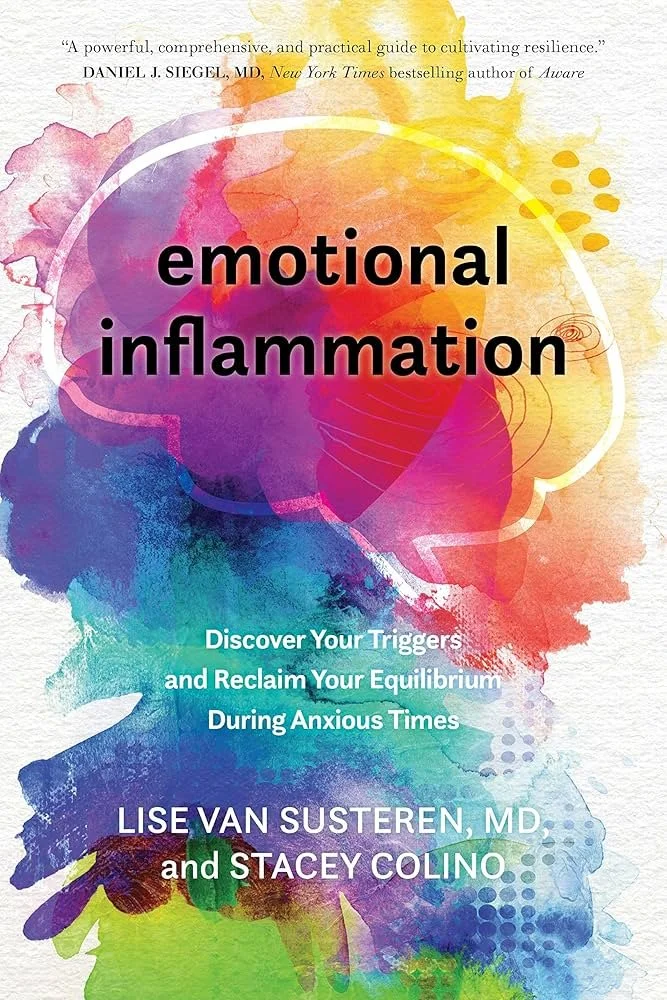
The book Emotional Inflammation by Lise Van Susteren and Stacey Colino offers a helpful framework for understanding why modern stress feels so intense and what we might do about it. Below are a few themes that stood out to me, along with how I see them connect to trauma and anxiety therapy.
Theme 1: Chronic Stress Has a Real, Cumulative Impact
It is common for people to downplay their distress because it does not feel connected to a single, overwhelming event. But ongoing stress, or what the authors call emotional inflammation, can slowly wear on our emotional, mental, social, spiritual, and physical systems.
People respond to this stress in many different ways. Some feel heightened worry. Others notice irritability or a shorter fuse. Some withdraw entirely. None of these reactions are wrong. They are signals from the body and nervous system that something feels overloaded.
The authors write, “Understanding your unique triggers and reactions will help you find the most effective ways to relieve your emotional inflammation so that your body and mind can return to a more balanced state.”
In therapy, I often see just how individualized these patterns are. Two people might go through the same situation and have very different emotional and physiological responses. This is one reason healing is never one-size-fits-all. Your nervous system needs tools shaped around your history, your pacing, and your needs.

Theme 2: Naming Feelings as a Pathway to Regulation
One of the first strategies the book highlights, and something I explore often in therapy, is noticing and naming emotions. It may sound simple, but it can create deep shifts.
The authors describe several potential benefits of emotional awareness:
reducing the intensity of difficult emotions
responding to your needs with more clarity
strengthening connection with others
When emotional awareness is limited, people often experience more reactivity, avoidance, anxiety, depression, and overwhelm. Without language for what is happening internally, everything can feel blurred together.
Practices like journaling, brief daily check-ins, or using a feelings wheel (which you can easily find online) can help put words to experiences that otherwise feel vague or confusing.
As the authors note, “This is the first, crucial step in the process of calming emotional inflammation because unless you’re able to honestly and accurately interpret your feelings, you can’t possibly figure out how to address them constructively.”
Theme 3: Changing Your Relationship with Thoughts
Thoughts can be incredibly helpful, or they can generate more stress. They can orient us toward problem-solving, or they can pull us into loops that feel never-ending.
Even thoughts that feel neutral or useful can become unhelpful when they repeat without offering clarity. For example, if I have prepared well for a presentation but my mind keeps returning to worries about how it will go, the thought has shifted from planning to rumination.
A tool I use in therapy, and personally, is learning to relate to thoughts simply as thoughts. You might try saying to yourself:
“I am having the thought that the presentation might not go well.”
This small shift creates space. It allows you to notice the thought without automatically reacting to it. You can decide whether to keep engaging, redirect your attention, or return to something more grounding.
Reframing is another useful approach. Before a musical performance, for example, I might notice nervous energy in my body. Instead of seeing it as a sign of danger, I can ask: Is this energy helping me prepare for something important? Looking at the experience from a new perspective can lessen its intensity and help me respond more intentionally.
The authors describe it this way:
When you work deliberately with your thoughts, “your mind is reset to a more balanced perspective, allowing you to shape your thoughts or question them in smart, constructive ways.”

Theme 4: Listening to the Wisdom of the Body
Discussions of chronic stress often focus on the mind, but the body carries just as much information. The book highlights several physical factors that support emotional balance, including sleep patterns, nourishing food, and regular movement.
Our bodies often show what our minds cannot yet see.
Think of a moment when you felt peaceful or content. As you recall it, notice what happens in your body. Maybe your shoulders drop, your chest softens, or your breathing slows.
These small shifts matter. They are signals of regulation and access points into the nervous system. When you can notice and return to these cues of calm, you strengthen your ability to respond effectively during stressful moments.
In therapy, practices like grounding, breathwork, gentle movement, or body scans can help you understand and work with these signals. Exploring these approaches with curiosity helps you discover what best supports your nervous system.
Closing Reflections
While the impacts of emotional inflammation or chronic stress are real, there are a number of ways that you can intentionally bring in tools, resources, and practices to find greater balance and increase your sense of peace. Naming emotions, reshaping your relationship with thoughts, and attuning to the body are all supportive pathways. The book highlights several other strategies that pair well with trauma-informed and anxiety-focused therapy.
If you notice signs of stress or emotional inflammation in your life, feel free to reach out. I would be glad to help you explore what groundedness, resilience, and calm can look like for you.